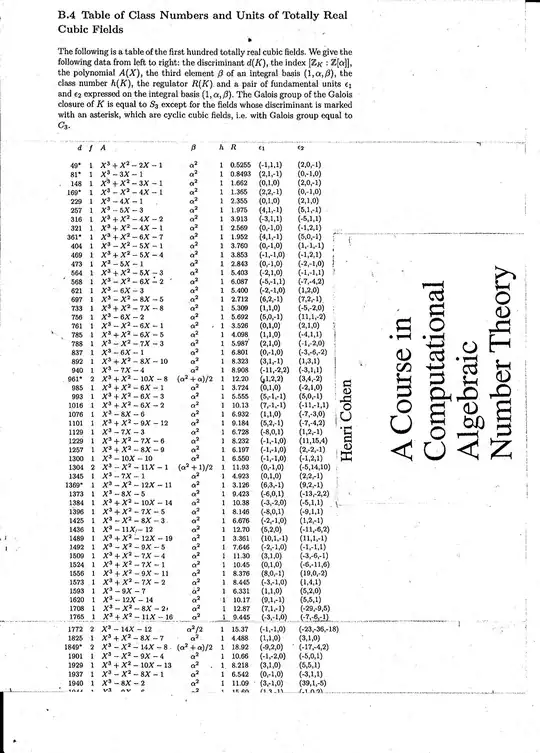
In A Course in Computational Algebraic Number Theory by Henri Cohen, see Appendix B.4, Table of Class Numbers and Units of Totally Real Number Fields, pages 521-523. Apparently I made a jpeg of this years ago.
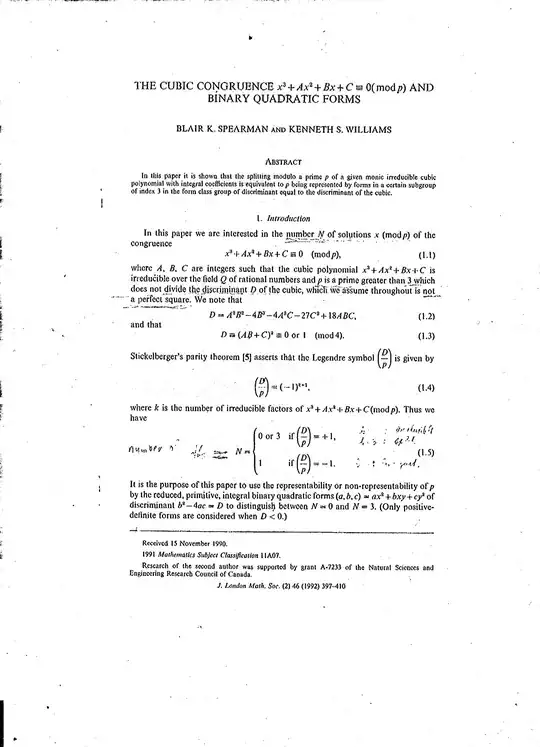
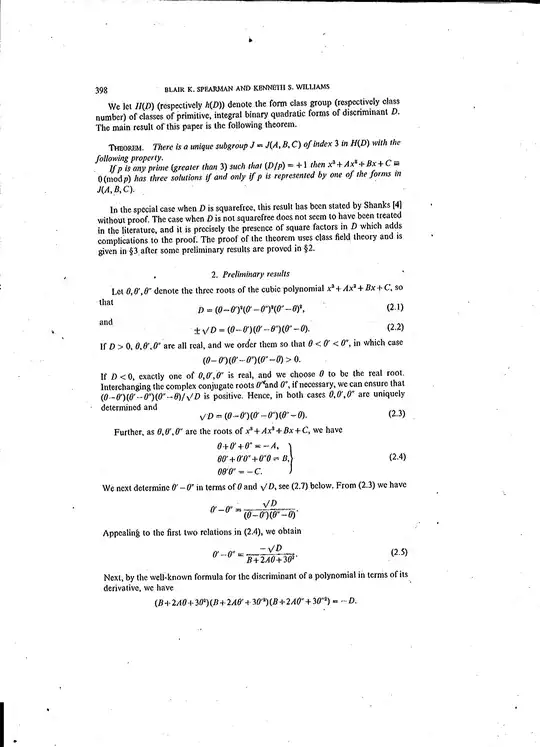
The material underlying my conclusion is the main Theorem in Spearman Williams (1992)
If you wish, you may use
$$ p = x^2 - 229 y^2 $$
First Version:
$$ p = x^2 + 15 xy - y^2 $$
Represented (positive) primes up to 10000
    37    53   173   193   229   241   347   359   383   439
   443   449   461   503   509   541   593   607   617   619
   643   691   907   967   977  1019  1051  1063  1097  1109
  1249  1277  1291  1303  1321  1399  1429  1583  1667  1741
  1783  1993  1997  2003  2087  2137  2143  2333  2347  2351
  2371  2381  2393  2503  2579  2657  2677  2687  2699  2729
  2749  2767  2791  2803  2897  3019  3023  3121  3203  3371
  3373  3391  3491  3517  3539  3581  3583  3631  3637  3761
  3767  3823  3847  3881  3889  3907  3919  4001  4019  4127
  4139  4177  4217  4273  4339  4397  4421  4481  4483  4523
  4547  4597  4637  4663  4679  4691  4871  4889  5087  5119
  5167  5209  5399  5479  5507  5521  5581  5647  5683  5689
  5737  5741  5843  5869  5879  5939  6007  6037  6203  6263
  6277  6301  6397  6421  6449  6547  6563  6581  6653  6701
  6719  6827  6871  6907  6967  7019  7039  7253  7283  7331
  7333  7499  7573  7621  7691  7823  7883  7907  8011  8059
  8123  8147  8219  8233  8243  8269  8429  8537  8573  8581
  8669  8677  8713  8753  8849  8863  8951  9007  9049  9187
  9221  9281  9341  9403  9497  9619  9643  9689  9739  9769
  9787  9851  9883
---------------------------------------
=-=-=-=-=-=-=-=-=-=-=-=-=-=-=-=-=-=-=-=-=-=-=-=-=-=-=-=-=-=-=-=-=-=-=-=-=-=-=-=-=
 these are the collection of remainders when dividing by   229

      0      1      3      4      5      9     11     12     14     16
     17     19     20     25     26     27     36     37     42     43
     44     45     46     49     51     53     55     56     57     60
     61     62     64     70     71     76     78     80     81     82
     83     85     91     94     95     97     99    100    103    104
    108    111    118    121    126    129    130    132    134    135
    138    144    146    147    148    149    151    154    158    159
    161    165    167    168    169    171    172    173    176    180
    181    183    184    185    186    187    193    196    202    204
    209    210    212    213    214    217    218    220    225    226
    228
=====================================================
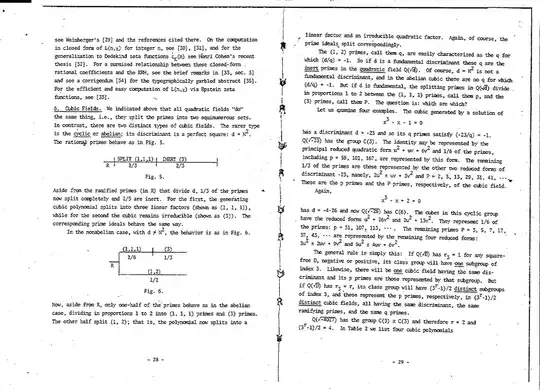
Next are two pages from the 1976 article by Daniel Shanks, which states the theorem about cubic fields without proof. It is the paragraph on page 29 that begins "The general rule is simply this:"