We actually only need $\sum a_i^2 >4$ for this to hold*. In particular, note that this condition implies that there is some finite set $I$ of the indexing subset such that $\sum_{i\in I}a_i^2>4$.
Let $b_i$ be the largest power of two less than or equal to $a_i$ for each $i\in I$. Clearly, $2b_i>a_i$. In particular, $\sum_{i\in I}b_i^2>1$. Now, we can inductively construct a by squares of side length $b_i$ for $i\in I$. To be specific, for each $k$, let $c_k$ be the number of $i\in I$ such that $b_i=2^{-k}$. We are equivalently trying to cover $[0,1]^2$ by a collection of squares of powers of two in side length, with $c_k$ copies of $[0,2^{-k}]^2$.
However, this is easy: Let $G_k$ be the partition** of $[0,1]^2$ into translates $[0,2^{-k}]^2$ in the obvious way (i.e. by slicing into $2^k$ rows and columns). Note that $G_{k+1}$ is always a refinement** of $G_k$. Then, we can place the squares from biggest to smallest; we can greedily place as many of the biggest $c_1$ squares into $G_1$ as possible. Then, if the square is not full, we put as many $c_2$ squares into the uncovered cells of $G_2$ as possible - and so on. Since each is a refinement of the last, we can always place a new square in without overlap of a previous square - unless everything is already full. This process must terminate eventually, since we only have finitely many squares. However, since their areas sum to more than one, and they are being placed without overlap, they must actually cover the square.
(*This inequality actually doesn't need to be strict; if you trace through the argument, the fact that the inequality $2b_i>a_i$ is strict lets us weaken the inequality for the sum)
(**This is all up to the boundaries of the cells, which might intersect. But since we're dealing with a finite set of squares, the union is closed, so measure zero sets don't matter anyways)
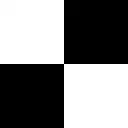
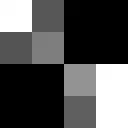
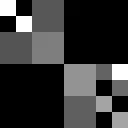
Here's an illustration of the process, where the squares are assumed to have powers of two as side lengths, $c_1=2$ and $c_2=5$ and $c_3=9$ and $c_4=12$. Observe that there's really nothing that could possibly go wrong: