1

I am trying to print a very thin casting mould. Once printed, I then pour an epoxy resin mix into the printed void. After curing the resin and demoulding, the final product is a mesh/web-like set of channels. The aim is to make these channels (aka the void) as thin as possible.

With lots of careful adjustments, I have succeeded in making these channels approx 0.4 mm thick with an FDM 3D printer and a 0.15 mm nozzle diameter.

However, I'd like to go thinner. I have little experience with resin 3D printers. I often see an XY resolution advertised of 0.05 mm. Does anyone have any experience printing extremely thin voids - and if so - what is the minimum reliable void thickness that a well-tuned resin printer could achieve in relation to the XY resolution?

i.e. a 0.05 mm XY resolution (aka pixel size) might equate to a reliable void thickness of quadruple the XY resolution i.e. 0.2 mm? If I attempted to print two sides of a box with only a single pixel gap in between these two walls, would there be lots of overlap and cured regions in the middle where light leaks and therefore cures in the intended void space?

agarza
  • 1,734
  • 2
  • 16
  • 33
Stacker
  • 11
  • 1

1 Answers1

1

According to one of the many resources available for x/y resolution of resin printers, specifically DLP and MSLA, Chitubox provides a formula to determine the minimum resolution.

How to calculate the pixel for DLP/LCD?

As XY resolution is fixed for DLP/LCD systems, so there is a equation:

Width / X Axis = Height / Y Axis = Native Pixel Size

If there is a 3D printer with a build area 68mm wide along the X axis. Divide 68mm (the X axis) by 1440 (the LCD width resolution in pixels), this will equal 0.047mm (47µm). And the native pixel size is 47µm.

0.047 mm is certainly close to the referenced 0.050 mm, but as also noted, there can be overlap/smear/filling created in the process.

There are test files for downloading and printing to use on a specific printer, allowing one to optimize exposure times and other settings. Cleaning of such small details could be a complication, perhaps resolved by an ultrasonic device and multiple passes of cleaning solution.

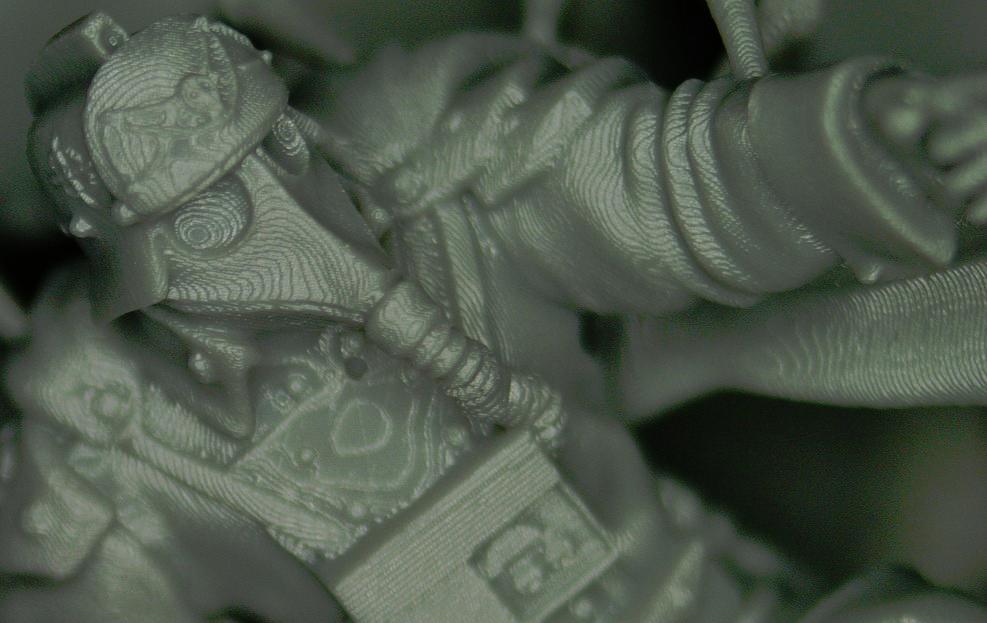
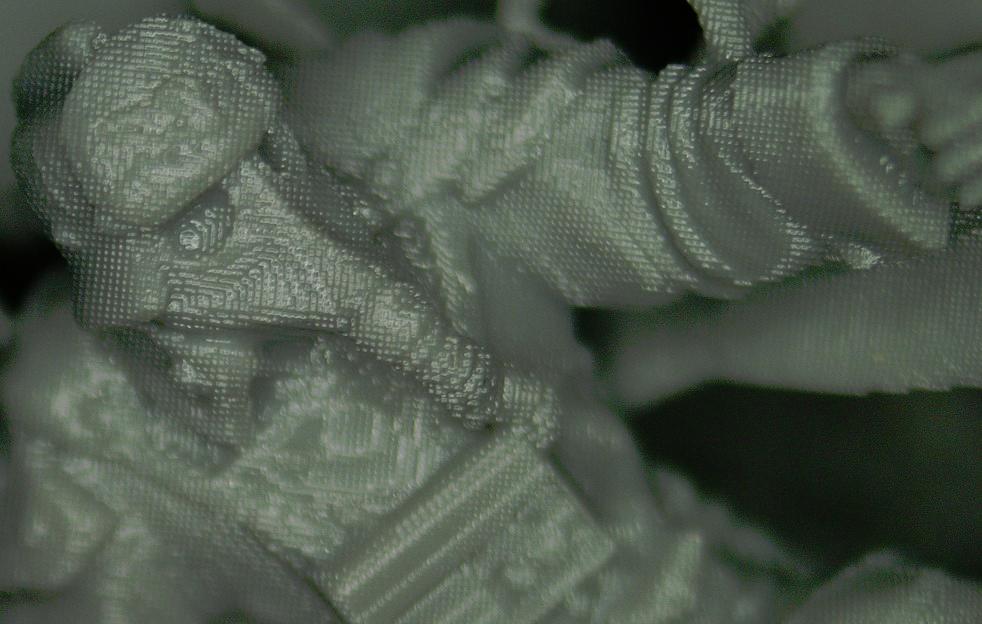
The linked site also provides these images for comparison of resolution settings:

47 micron resolution

47 micron resolution

100 micron resolution

100 micron resolution

A one pixel wall between channels is going to be incredibly fragile and may not survive a suitably complete cleaning process.

fred_dot_u
  • 12,140
  • 1
  • 13
  • 26