Yes, there is such a formula (assuming $k$ and $n$ are natural numbers).
In order to find it, I suggest you the following:
Let $k, n\in \Bbb N$. Suppose you have $n$ balls (representing the number $n$), what you want is the number of ways to place this $n$ balls on $k$ boxes (each box will represent the number being added), this can be encoded with a list of the balls, using vertical lines to separate the boxes.
For example, the partition $6=3+2+1$ can be encoded as
$$\bigcirc \bigcirc \bigcirc \mid \bigcirc \bigcirc \mid \bigcirc$$
Each partition correspond to a sequence of $n$ balls and $k-1$ separators, and each such a sequence correspond to a partition, so it suffices to count those sequences.
Those sequences are easy to count:
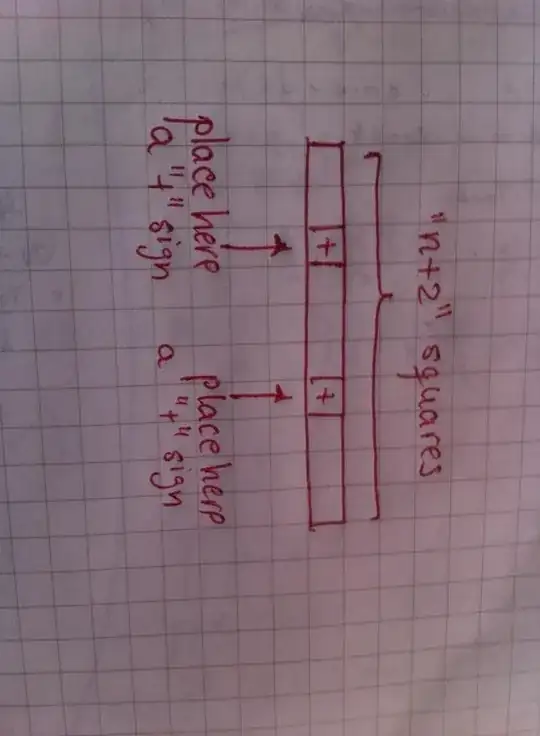
Those sequences consist of $n+k-1$ characters ($n$ balls and $k-1$ separators), just choose $k-1$ positions for the separators among all the $n+k-1$ available: $\binom {n+k-1}{k-1}$