Is this really possible? Is there any other example of this other than the Koch Snowflake? If so can you prove that example to be true?
Asked
Active
Viewed 3.3k times
80

-
24The Koch Snowflake has the "other problem": it is a finite area contained in an infinite perimeter. Is that what you meant? Is the Koch Triangle something else? – Eric Stucky Dec 01 '14 at 06:10
-
Sorry i meant koch snowflake. Thanks for the correction – Chris Truong Dec 01 '14 at 06:16
-
2Gabriel's horn is a 3-D equivalent. Infinite volume but finite surface area. – CogitoErgoCogitoSum Dec 01 '14 at 06:34
-
26@CogitoErgoCogitoSum Surely Gabriel's horn has finite volume and infinite surface area. – Jeppe Stig Nielsen Dec 01 '14 at 08:50
-
Did I write that backwards? Eh, its all good. Sort of irrelevant to the conversation. – CogitoErgoCogitoSum Dec 01 '14 at 09:14
-
5Your statement is wrong. As @EricStucky pointed out, the Koch Snowflake has finite area and infinite perimeter. – JRN Dec 01 '14 at 13:10
-
2Gabriel's horn would be an example in 3D in the sense that the perimeter (=boundary curve) at the opening has finite length, but the area is infinite. [/rimshot] – Jyrki Lahtonen Dec 01 '14 at 15:14
-
1@CogitoErgoCogitoSum Gabriel's horn has finite volume and infinite surface area... – imranfat Dec 01 '14 at 21:03
-
It's possible in non Euclidean geometry. – Harshal Gajjar Dec 02 '14 at 14:43
-
Gabriel's horn has infinite surface area, right? And the perimeter of that infinite surface is just a circle... – MartianInvader Dec 02 '14 at 20:50
-
As some of the answers and comments are getting at (albeit obliquely) - the answer depends on the dimensionality you're willing to accept in an answer. – user23715 Dec 02 '14 at 21:36
-
2How about $\Bbb R^2$? Zero perimeter, infinite area. – Dave Dec 03 '14 at 22:34
-
SORRY?! no one has found an error in the wording? Area is Surface Area, i.e. CM2 inside the 4 sides of a square or the 6 faces of a cube, and perimiter, is the length of the sides of the cube, or an bounding box that can enclose the 3d shape. - Is the question for 2d or 3d? - mandelbulb has infinite surface area, and can be held in a finite bounding box, and so can mandelbox. – bandybabboon Dec 04 '14 at 08:16
-
Sure. An infinitely long cylinder has an infinite area, but a perimeter length of zero. Of course, that's not in $\mathbb{R}^2$, which was not stated as a requirement, but may have been intended..? – RBarryYoung Dec 04 '14 at 16:50
-
Are you open to non-Euclidean spaces? – user76284 Sep 06 '21 at 06:04
10 Answers
101
One can have a bounded region in the plane with finite area and infinite perimeter, and this (and not the reverse) is true for (the inside of) the Koch Snowflake.
On the other hand, the Isoperimetric Inequality says that if a bounded region has area $A$ and perimeter $L$, then $$4 \pi A \leq L^2,$$ and in particular, finite perimeter implies finite area. In fact, equality holds here if and only if the region is a disk (that is, if its boundary is a circle). See these notes (pdf) for much more about this inequality, including a few proofs.
(As Peter LeFanu Lumsdaine observes in the comments below, proving this inequality in its full generality is technically demanding, but to answer the question of whether there's a bounded region with infinite area but finite perimeter, it's enough to know that there is some positive constant $\lambda$ for which $$A \leq \lambda L^2,$$ and it's easy to see this intuitively: Any closed, simple curve of length $L$ must be contained in the disc of radius $\frac{L}{2}$ centered at any point on the curve, and so the area of the region the curve encloses is smaller than the area of the disk, that is, $$A \leq \frac{\pi}{4} L^2.)$$
NB that the Isoperimetric Inequality is not true, however, if one allows general surfaces (roughly, 2-dimensional shapes not contained in the plane. For example, if one starts with a disk and "pushes the inside out" without changing the circular boundary of the disk, then one can make a region with a given perimeter (the circumference of the boundary circle) but (finite) surface area as large as one likes.

Travis Willse
- 108,056
-
10The rigidity of $\Bbb R^2$ is really astounding to me sometimes. – Cameron L. Williams Dec 01 '14 at 06:20
-
I just had a very quick look at the pdf but, AFAIK, Isoperimetric Inequality applies only to piecewise ${\mathcal C}^1$ curves, no? – Taladris Dec 01 '14 at 09:19
-
2There are many versions, but the most general (in $\mathbb{R}^2$ anyway) applies to any simple, closed curve. I'm not an expert in the area, but I think the piecewise $C^1$ case is typically the one sees first, since some of the available proofs in that setting are satisfactorily elementary. – Travis Willse Dec 01 '14 at 10:16
-
2@CameronWilliams $\mathbb{R}^2$ is surely quite rigid, but an isoperimetric inequality holds in any dimension and for both Lebesgue and Gaussian measure. For example in $\mathbb{R}^n$, for any compact set, $S/V^{(n-1)/n} \geq n\omega_n^{1/n}$ where $S$ is the measure of the boundary of the set (Minkowski content) and $V$ is the Lebesgue measure of the set. – Sasho Nikolov Dec 01 '14 at 21:25
-
19The isoperimetric equality is a bit of work to prove (especially for a maximally large class of curves), but that’s because it gives a sharp bound on the area. For this question, a much easier inequality suffices: $A \leq \pi L^2/4$. This follows just from the fact that a line is the shortest path (in the sense of your desired class of curves) between two points: from that fact, it is clear that a closed curve of length $L$ must lie entirely within the disc of radius $L/2$ around its starting point, and hence the region it encloses is a subset of that disc. – Peter LeFanu Lumsdaine Dec 02 '14 at 09:23
-
@PeterLeFanuLumsdaine You're quite right, and this is a very good observation! You might like to post this as a separate answer, as it is (1) self-contained, and (2) wholly elementary. – Travis Willse Dec 02 '14 at 11:48
-
1
-
@Travis Is there an analogous inequality for volume (relating to area)? I looked at the 'generalisations to higher dimensions' on the Wikipedia page, but didn't really understand it. – beep-boop Dec 03 '14 at 21:04
-
1@alexqwx Yes, if a bounded region in $\mathbb{R}^3$ has area $A$ and volume $V$, then $36 \pi V^2 \leq A^3$, and equality holds iff the region is a ball (that is, if its boundary is a sphere). Sasho Nikolov's formula above gives similar estimates for higher dimensions; what changes is (1) the dimensions of the "bulk" and the "boundary", and (2) the coefficient. – Travis Willse Dec 04 '14 at 01:09
-
1The most general form of the isoperimetric inequality in $\mathbb R^2$ holds for completely arbitrary regions (only with the caveat that we may need to swap the region for its complement, to rule out cases like the complement of a disc). Here, perimeter may be defined as the 1-dimensional Hausdorff measure of the topological boundary, and area as, say, the outer Lebesgue measure of the region (this choice doesn’t matter much: if the perimeter is finite, the region is automatically measurable with null boundary). – Emil Jeřábek Dec 04 '14 at 17:58
68
It's a bit of a matter of semantics.
What's a "shape" but a subset of the plane separated from the rest by a curve? But which subset?
A circumference (for example) is a finite closed curve (with finite perimeter) that separates and defines two subsets of the plane - we conventionally pick the one with finite area and we call it "circle". But the circumference also defines the subset with infinite area that lays "outside" (which is a conventional concept). That other "outside shape" would be an example of a finite-perimeter curve with an infinite area.
That sounds like cheating and playing with words. But think about it: what else could possibly an infinite area delimited by a finite curve look like? If you only allow yourself to look at the "inside" of any closed curve, it couldn't have an infinite area because you can always define a circumference "around it" whose circle would necessarily fully contain the first shape and also be of finite area. Any possible shape with infinite area and finite perimeter would have to be the "outside" delimited by a closed curve.
So the answer to your question depends on whether you're interested in considering the "outside" of a closed curve (in which case all closed curves delimit such shapes), or whether you're not (in which case there cannot be any such shape).

Euro Micelli
- 1,025
-
10Excellent observation! I suppose, then, that the "real" question would be whether there exists a closed curve of finite length such that both the interior and the exterior of the curve have infinite area--which would appear to be prohibited by the isoperimetric inequality, as stated in Travis's answer. – Kyle Strand Dec 01 '14 at 19:42
-
7
61
Consider a 1-by-1 square, let your shape be everything on 2-dimensional Euclidean space except this square. Perimeter is 4, area is $\infty$.

-
69
-
-
Do you mean Riemann's sphere of complex plane without preimage of that square ? – Fardad Pouran Jan 01 '15 at 06:40
10
The geometric figure which occupies the largest area given a fixed perimeter is the disk of a circle. But all circles with finite perimeters have finite areas. $($In three dimensions, the geometric shape which occupies the largest volume given a fixed surface is the sphere. So, if your question would have been about three-dimensional objects with infinite volume and finite perimeter, the answer would still have been a no$)$. Both these results $($as well as countless other optimization problems, about finding the extrema $[$i.e., minima and maxima$]$ of a function$)$ are obtained using calculus.

Lucian
- 49,312
7
Any bounded subset of $\mathbb{R}^2$ clearly has finite area (assuming $A \subseteq B$ implies $Area(A) \leq Area(B)$, which is true for instance with Lebesgue measure or any other reasonable sense of "area"), so for such a set to exist, it would have to be unbounded.
Perimeter is harder to define, but I think it's believable that for any meaningful sense of perimeter $p$, $p(A) \geq \sup \{ |x_1 - x_2| : x_1,x_2 \in A \}$, i.e. the perimeter of a set is at least as great as the distance between any two points in the set. Thus, if the set is unbounded, its perimeter cannot be finite.

4
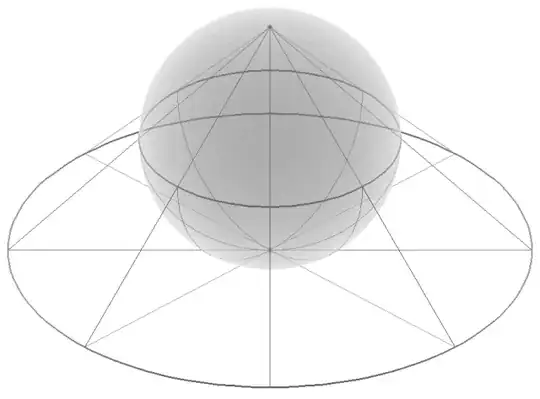
If instead of the plane, you considered the Riemann sphere, the equator has perimiter = 1, but it also bounds an infinite region on the top.

tlehman
- 878
-
1This is essentially the same answer as James Worthington's, except using a unit circle instead of square. But good answer either way! – Charles Dec 04 '14 at 17:14
2
Consider a sphere of infinite radius, with a hole of radius R cut in it.
The interior or exterior surface has infinite area, but the bounding edge has a finite length of the circumference of the hole...

Dave
- 29
-
29This reminds me of the old joke about a shepherd who asked three people to build a pen in the most efficient way possible. On day 1, the physicist builds a perfectly circular fence to give the sheep plenty of room to move. On day 2, the engineer builds a square pen of equal area. Since the fence only has four posts, it can be built much more cheaply despite the longer perimeter. On day 3, the farmer returns to find sheep roaming everywhere and the mathematician standing in the middle of the field, wrapped in wire. "Ah," says the mathematician, "but you see, I am on the outside!" – r3mainer Dec 01 '14 at 22:02
0
There isn't—on a plane. However we may take a 3D cylindrical coordinate system and define a surface $z=\sqrt r \sin\tfrac 1r$. The $\tfrac 1r$ term makes infinite sequence of waves towards the center, $\sqrt r$ term reduces their height (amplitude) so that the surface has no singularity there.
Then we cut a part of the surface, containing the center point – it will possibly have an infinite area.
The function above is just a sketch, I didn't check if the area is actually infinite. In case I'm wrong you might either increase the waves' frequency growth, say by replacing $\frac 1r$ with $\frac 1{r^3}$ or with $\exp(\tfrac 1r)$, or take the steeper amplitude term, say $\sqrt[4] r$ instead of $\sqrt r$.

CiaPan
- 13,884
0
Take an Euclidean plane. Draw a circle. Now the region outside the circle has infinite area but finite boundary.
Interestingly enough we even can find the area of that infinite shape in closed form. But it would depend on the filtering (for some shapes the placement of the coordinate origin also would make difference but not in this case).
Let the circle have the radius of 1.
If we take the filtering along the polar radius, the area of the whole plane is
$$S_p=\int_0^\infty 2\pi r dr= 2\pi \left(\frac {\tau^2}2+\frac1{24}\right)=\pi\tau^2+\frac\pi{12}$$
where $$\tau=\int_0^\infty 1 dx,$$
a divergent integral.
Now, we take the area of the circle, $\pi$ from the area of the plane. We get
$$S=\pi\tau^2-\frac{11\pi}{12}$$

Anixx
- 10,161
-
This is identical to James Worthington's answer from six years ago. – Noah Schweber Apr 19 '20 at 00:21
-
-
