I see a lot of people post this similar question on StackExchange, and the truth is that there is no methodology to compare if data set A looks like set B. You can compare summary statistics, such as means, deviations, min/max, but there's no magical formula to say that data set A looks like B, especially if they are varying data sets by rows and columns.
I work at one of the largest credit score/fraud analytics companies in the US. Our models utilize large number of variables. When my team gets a request for a report, we have to look at each individual variable to inspect that the variables are populated as they should be with respect to the context of the client. This is very time consuming, but necessary. Some tasks do not have magical formulas to get around inspecting and digging deep into the data. However, any good data analyst should understand this already.
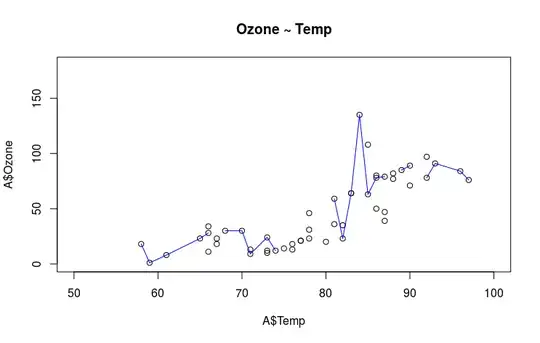
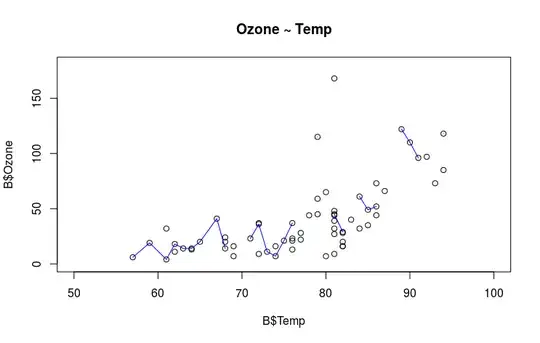
Given your situation, I believe you should identify key statistics of interest to your data/problems. You may also want to look at what distributions look like graphically, as well as how variables relate to others. If for data set A, Temp and Ozone are positively correlated, and if B is generated through the same source (or similar stochastic process), then B's Temp and Ozone should also exhibit a similar relationship.
My I will illustrate my point via this example:
data("airquality")
head(airquality)
dim(airquality)

set.seed(123)
indices <- sample(x = 1:153, size = 70, replace = FALSE) ## randomly select 70 obs

A = airquality[indices,]
B = airquality[-indices,]


summary(A$Temp) ## compare quantiles

summary(B$Temp)

plot(A)
plot(B)

plot(density(A$Temp), main = "Density of Temperature")
plot(density(B$Temp), main = "Density of Temperature")


plot(x = A$Temp, y = A$Ozone, type = "p", main = "Ozone ~ Temp",
     xlim = c(50, 100), ylim = c(0, 180))
lines(lowess(x = A$Temp, y = A$Ozone), col = "blue")
plot(x = B$Temp, y = B$Ozone, type = "p", main = "Ozone ~ Temp",
     xlim = c(50, 100), ylim = c(0, 180))
lines(lowess(x = B$Temp, y = B$Ozone), col = "blue")
cor(x = A$Temp, y = A$Ozone, method = "spearman", use = "complete.obs") ## [1] 0.8285805

cor(x = B$Temp, y = B$Ozone, method = "spearman", use = "complete.obs") ## [1] 0.6924934


