I recently looked into the subject of public key cryptography (especially with X.509 certificates). I am the administrator of a web server using HTTPS which uses 2 levels of certificates (in addition to the end-user certificate for the website). Here is the schema :
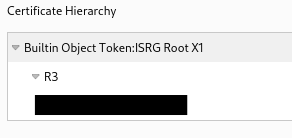
The black line is intentional to keep the anonymous. But it corresponds to my end-user certificate.
By looking carefully into the "CA bundle" provided by the CA service (where I bought the certificate), I got a file like this :
- End-user certificate
- Intermediate certificate
- A certificate which I assume it is the root CA certificate (by logic) but it doesn't by comparing with the CA certificate stored in my OS.
Indeed, the third certificate in the bundle file does not match to any of my certificate or the root certificate present in my system. Normally it is the ISRG Root X1 in my case.
However, both end-user and intermediate certificates match perfectly (R3 certificate).
I probably misunderstanding something with this bundle file, but I would need help to understand what happens exactly with it, is it normal that the third certificate in the bundle does not match with the root CA ? Furthermore, in the apache2 HTTPS configuration for example, the bundle file is clearly not mandatory to operate a HTTPS connection to my website. Only the end-user certificate is necessary (and the private key as well).
Why the end-user certificate only is necessary ? How clients web browsers manage to retrieve the whole certificates levels and tree with just this certificate ? I imagine that it is thanks to the "issuer" section in the certificate am right ?
Thank you in advance for your help.
